From Painting to Non-Painting and Back Again
László Lakner’s Dialogue with Marcel Duchamp
The art of László Lakner has, since the very beginning, been saturated with art historical, literary and historical references and quotations. Particularly important among them is Marcel Duchamp, who, as a painter who abandoned painting, challenged the possibilities and limitations of making pictures and the conceptual framework of painting. His faith and doubt in painting, irony and scepticism towards painting, the subtle humour, and the complex network of diverse quotations and self-references can be the point of departure for all practices in painting and non-painting that reflect on the nature of painting, especially since the 1960s.
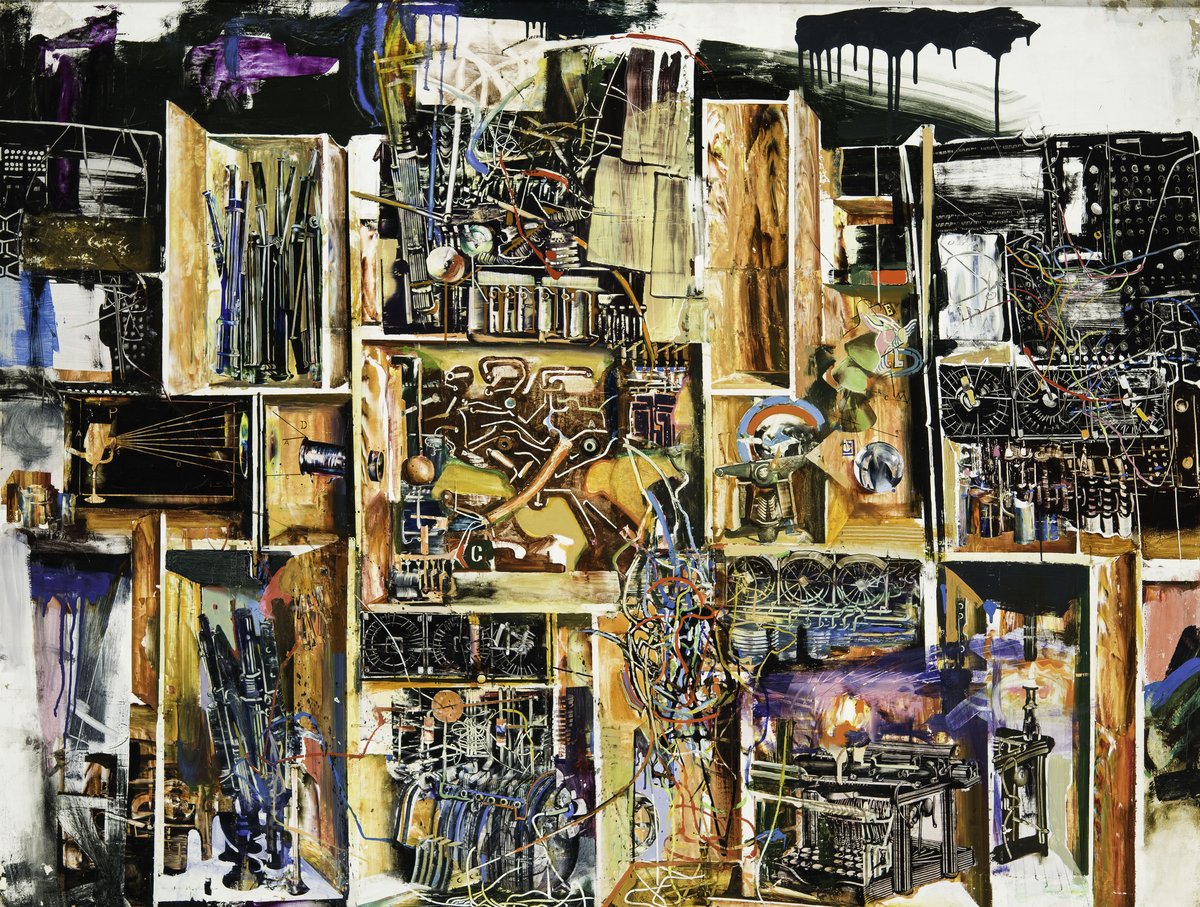
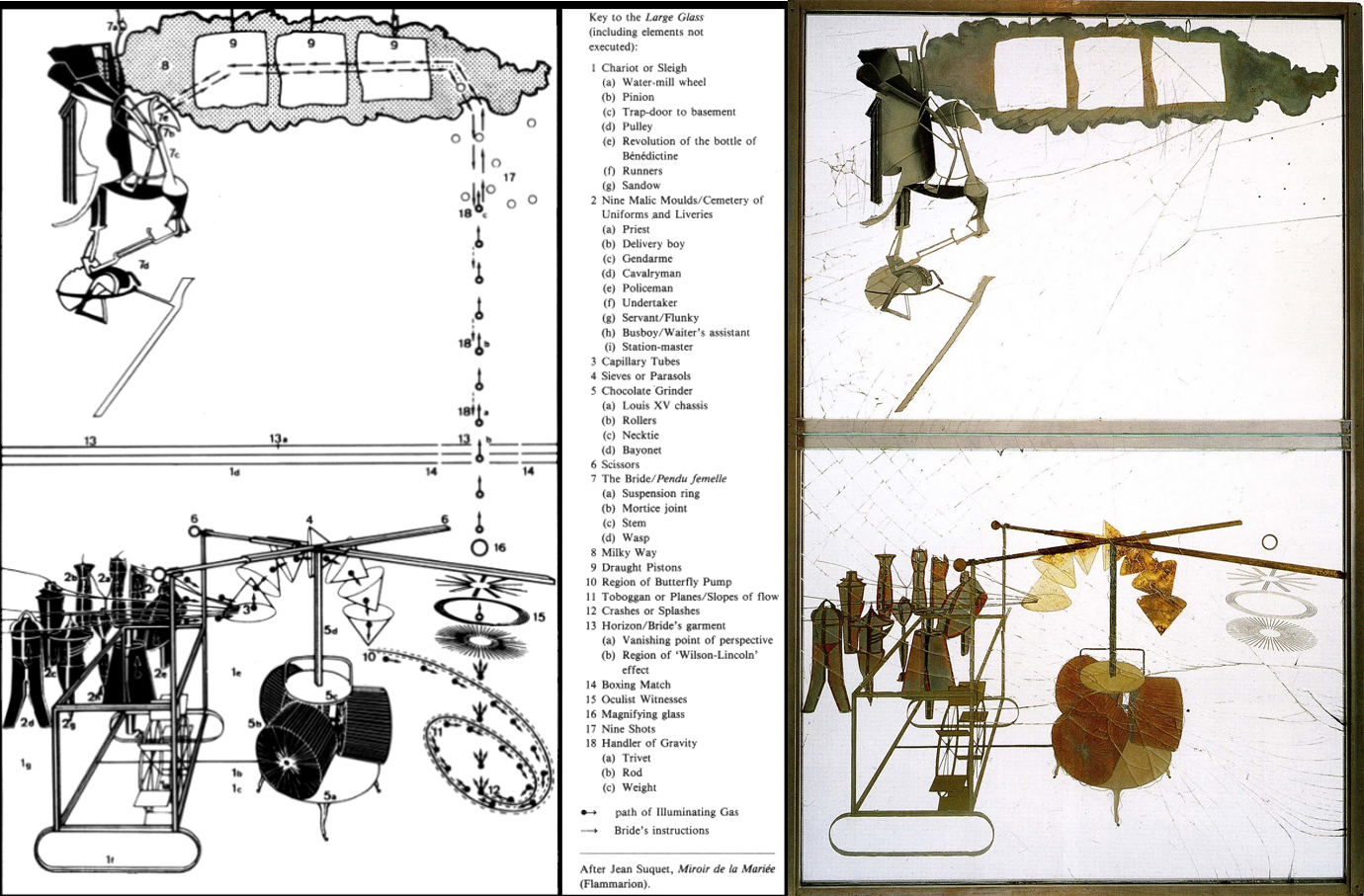
Even in his earliest surnaturalist works, Lakner quoted Duchamp: the painting Polytechnical Instruction Cupboard (1962-64) depicts an open cabinet, similar to a Kunstkammerschrank, containing various optical instruments, telescopes and microscopes, a convex mirror recalling Van Eyck – and of course the artist’s own painting Seamstresses Listen to Hitler’s Speech (1960) – , and mysterious contraptions and devices. The dense composition, teeming almost to the point of irony with motifs and featuring countless references from early Netherlandish painting to baroque trompe-l’oeil still lifes, also includes as a quotation the cone-like “Capillary Tubes” from Marcel Duchamp’s The Large Glass (1915-23). It would perhaps be rash to interpret this riotous composition, which is literally encyclopaedic in scope (Lakner at the time was particularly inspired by the 1936 edition of Larousse), as a kind of system, similar to Duchamp’s The Large Glass. Some years ago, I attempted to describe how the work proceeds, compartment by compartment, from optical devices showing close-up and distant views to the typewriter motif, from vision to description, from image to word – which later did arise as a key question in Lakner’s art –, but in retrospect I had to accept I had overreached with my interpretation,1 conceding that instead, Judit Szabadi was probably correct in describing Lakner’s paintings of that time – including Polytechnical Instruction Cupboard – as “still-life satires”.2 And indeed, this painting, one of Lakner’s last surnaturalist works, painted over several years, was more a flamboyant summation of the artist’s own motifs and interests (from microscopes to the world of magic lanterns) than a fantastical structure illustrating the processes of seeing and describing. Lakner compiled the motifs of his early works into the compartments of a single cabinet, much like Duchamp packed miniature replicas of his readymades and other works into a suitcase (La Boîte-en-valise, 1936-41).
While examining the surface of the painting early on, I noticed a small detail: the slightly more impasto monochrome white patch next to the Duchamp reference, into which Lakner scratched letters, lines, and enigmatic ciphers and formulas. I am quite certain that when he deployed the same solution in his large-scale Duchamp series some fifteen years later, he did not do so consciously, and yet this connection, this mix of conscious retrospection and unconscious forward-looking, is nonetheless remarkable.
Lakner’s depictions of machines were therefore determined by the influence of Dadaism, above all, that of Marcel Duchamp, Francis Picabia and Kurt Schwitters, as the artist himself stated to Edit Szentesi, when recalling, among other things, the painting entitled Givaudan Stereoscope, which is still missing today: “these pictures […] launched an important chapter in my interest – and this interest is still with me – towards Dada, Marcel Duchamp, Schwitters and Picabia. Duchamp’s Chocolate Grinder and Picabia’s machine drawings in the magazine 391 had a tremendous impact on me, and one of the outgrowths of this was the Givaudan Stereoscope. […] at the time I was enchanted by all kinds of mechanical perfection.”3
In terms of motifs and styles, Lakner’s entire oeuvre is at least as exuberant and diverse as the structures in his early still lifes. As I see it, by exploring the path of each motif and reference, concrete connections can be uncovered between his different creative periods and styles.
Duchamp’s presence in Lakner’s oeuvre is particularly fascinating, because works related to Duchamp can be found in virtually every creative period, from the early surnaturalist still lifes to conceptual works and photorealist paintings, then the series of text- and writing-based pictures, and further on to the abstract compositions of the 1990s. The reference may be hidden, but is sometimes quite explicit.
When Lakner chose himself as his model in his Self-Modellings series, his points of reference were Duchamp and Yves Klein.4 When he gave a structuralist sugarcube composition the title Why not sneeze Rrose Sélavy (Hommage à Marcel Duchamp) (c. 1969-72), the connection could hardly have been more obvious. In his works, Duchamp examined not only art, but also the identity of the artist (and as such his own identity too), creating alter egos through which he could look back on himself from the outside, with this analysis also affecting the creative process. Another key characteristic of Lakner’s art is the act of playing with identities, the process of creating alter egos,5 which entails the serial utilisation, adaptation and quotation not only of motifs, but also of styles and media, leading to a constant varying of perspectives. What we have here is a self-reflective artistic habitus which, simultaneously, is outside and inside, looks forward and back, and is characterised by the ethos of the avant-garde and the irony of the arrière-garde.6
Duchamp questioned the continuability and nature of painting, making him an essential reference point for all conceptual practice. The situation becomes particularly complex when painters question the framework of painting via the tools of painting, by, as it were, conceptualising painting itself. Consider the oeuvre of Gerhard Richter, likewise diverse and “panoramic”7 when it comes to styles and motifs, whose evolution is likewise defined by an encounter with Duchamp’s art at the French artist’s exhibition in Krefeld in 1965. I would also describe Lakner’s “metamorphic”8 oeuvre as a series of attempts to conceptualise painting, characterised by the endless dialectic of faith and doubt in painting, by the impossible synthesis of sensuality and conceptuality.
The duality of the simultaneous denial and acknowledgement of painting is also indicated in a note Lakner wrote in the 1970s, preserved in typescript, which can be understood as a thought experiment. In it, he wrote down, in French, German and English, Duchamp’s question “and why wouldn’t you paint?”, which according to the fiction of the text, was addressed to Lakner himself. The question is oddly ambiguous, as it can be read both as a rejection of painting (why you shouldn’t paint) and as an affirmation (paint, why not?). Painting and non-painting, that is, the subversive attitude of the avant-garde and the continuation of the traditions of classical art, become inseparable in Lakner’s work, and this paradox also provides one of the possible keys to unlocking his oeuvre.9
A unique example of this duality is found in one of Lakner’s key works, Duchamp’s Comb (1973-74), which shows a photo of Duchamp’s readymade Peigne [Comb] (1916) painted in a photorealistic manner. As a painter who abandoned painting, Duchamp sought forms of art beyond painting. As is well known, he radically expanded the conceptual framework of art by declaring found objects (readymades) to be art. In the early 1970s, Lakner turned to historical documents and photographs as readymades, including a photo of Duchamp’s readymade. With a strange double twist, he painted Duchamp’s readymade photorealistically, thus returning it to the territory of painting, but to a kind of painting in which the act of painting is no more than a conceptual gesture. In Lakner’s art, Duchamp is an extraordinary alter ego, a peculiar metaphor for painting beyond painting, and for painterliness that questions painting.
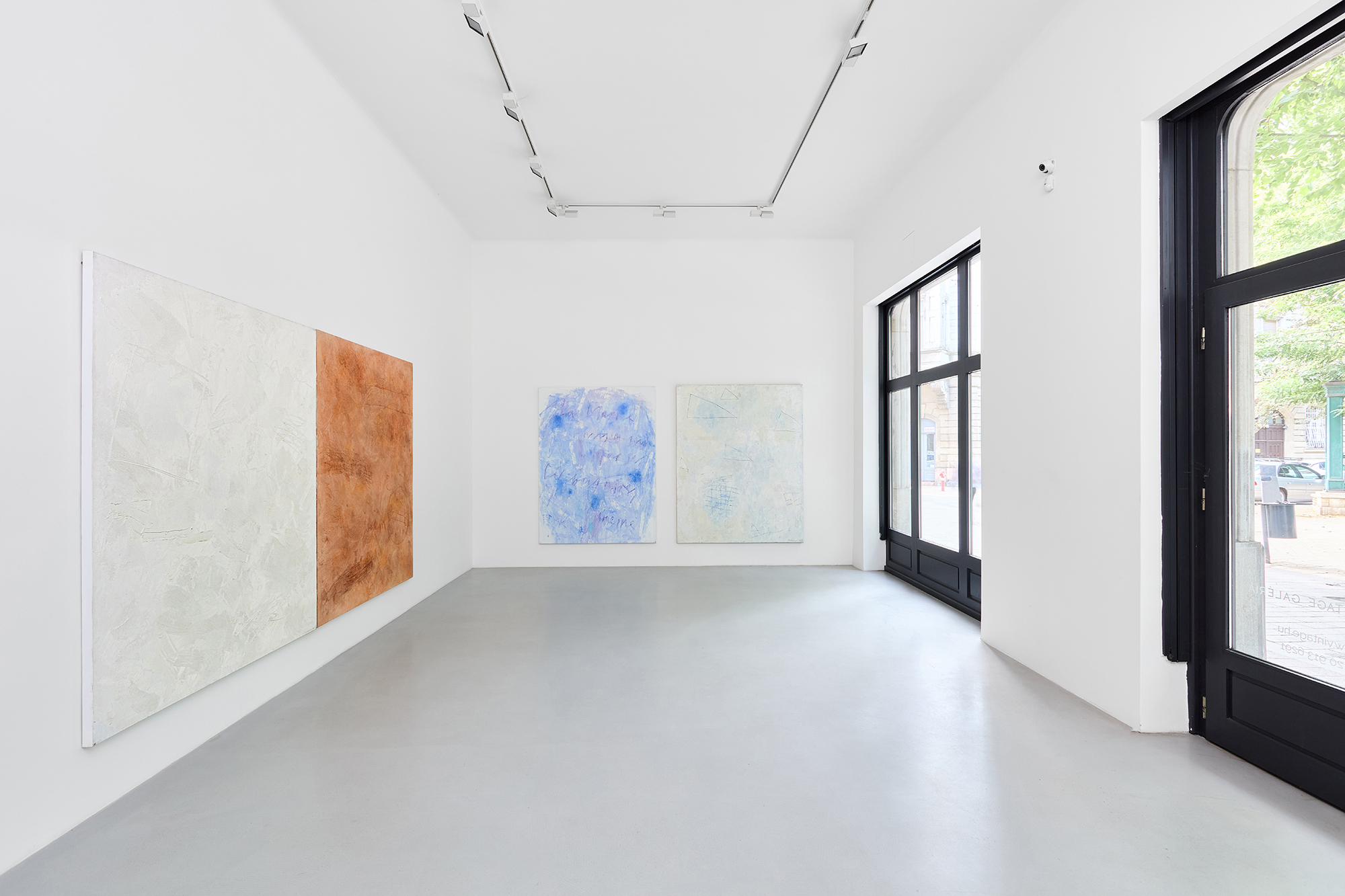
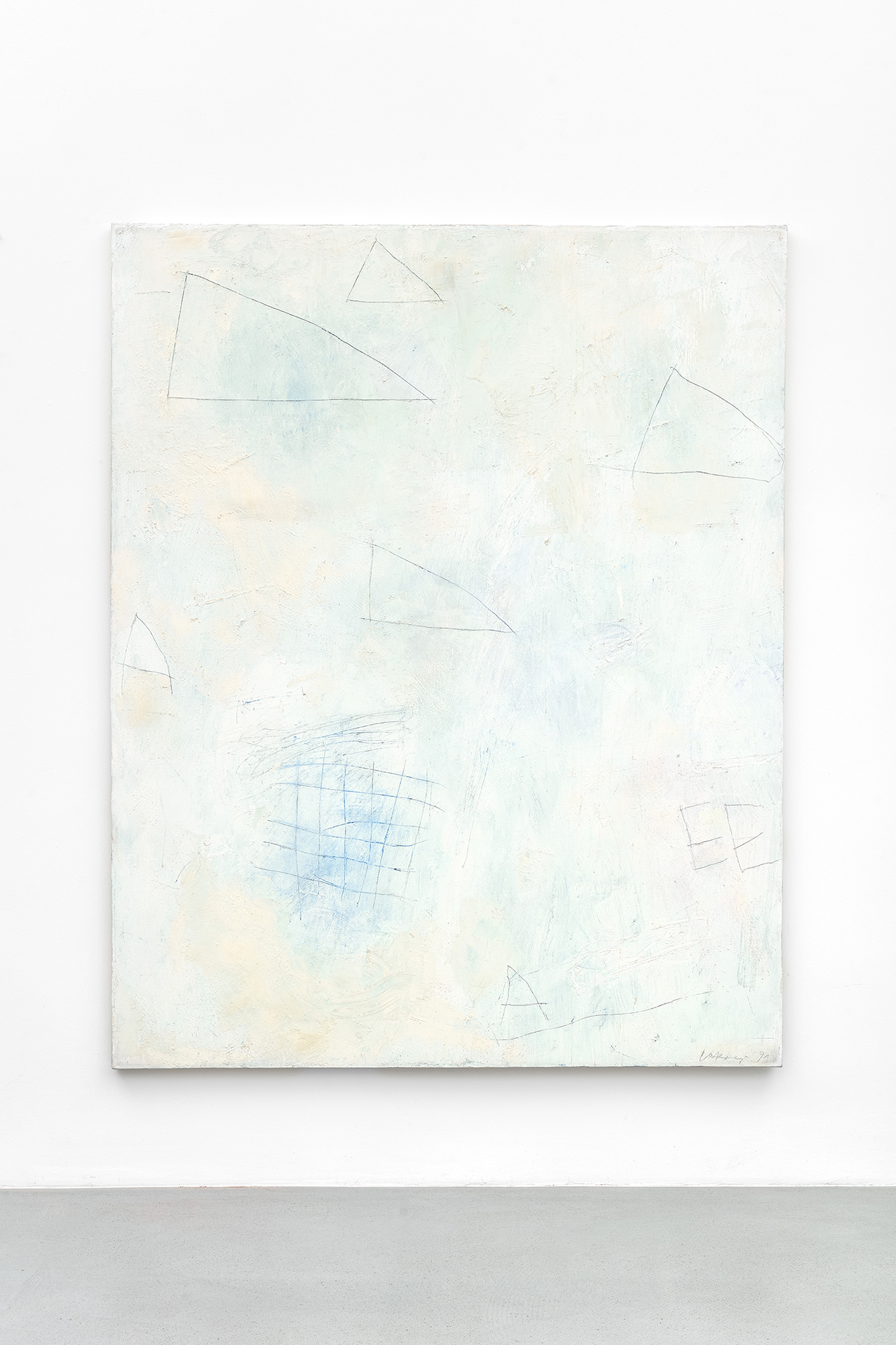
The references do not end there, of course. In 1996, Lakner painted another Duchamp paraphrase (Duchamp-fragment, 1996), consisting of an impasto ground onto which he incised, using his own (deliberately distorted) handwriting, Duchamp’s enigmatic and playful sentence: “Classer les peignes par le nombre de leurs dents” [Classify combs by the number of their teeth]. In the sentence, Duchamp quotes himself, while Lakner quotes himself quoting Duchamp, creating a layered structure of quotations similar to the palimpsest-like surface of a sensual, abstract painting.10 While every single word in the sentence could be accompanied by a flurry of footnotes, I will focus on the motif of the comb. Thierry de Duve has convincingly argued that the comb in Duchamp’s art is a multifaceted, “three-dimensional pun”. The word peigne [comb] rhymes with the word peindre [to paint], and the comb itself is nothing more than an experimental painting tool that was also used by the Cubists (e.g. in paintings by Picasso).11 Duchamp had just abandoned Cubism when he turned towards the readymade. Lakner, during his surnaturalist period, often used the comb as a tool for modelling surfaces. Duchamp’s comb, recreated as a sensual yet conceptual painting, is in this sense a multifaceted metaphor for the sublation of painting.
In 1975-76, Lakner made a painting of the back cover of the March 1945 issue of View magazine, designed by Duchamp and featuring his statement containing the famous term infra-mince (infra-thin): “Quand la fumée de tabac sent aussi de la bouche qui l’exhale, les deux odeurs s’épousent par infra-mince” [When tobacco smoke also smells of the mouth that exhales it, the two odours are married through infra-thin]. The interplay of quotations is again complex: Smoke and the Mouth were frequently recurring motifs in Lakner’s painting in the 1960s. The emphasis, however, seems to be on the concept of infra-mince, the tangible-intangible, membrane-thin boundary between painting and non-painting, between sensuality and conceptuality, which is also a key theme in Lakner’s art.
In his book Kant After Duchamp, Thierry de Duve reflects with great complexity on Duchamp’s questions about the relationship between painting and non-painting. Among other things, he approaches Duchamp’s practice of questioning “retinal” art from the perspective of the abstract understanding of painting, for example, that of Kandinsky.12 When Kandinsky wrote about the purity of colour squeezed out of a tube, he was referring to the – sometimes wholly spiritual – purity of painting, traced back to its basic elements. Duchamp also took the tube of paint as his point of departure, as he explained in an interview with Georges Charbonnier in 1961: “The word ‘art’, etymologically speaking, means to make, simply to make. Now what is making? Making something is choosing a tube of blue, a tube of red, putting some of it on the palette, and always choosing the quality of the blue, the quality of the red, and always choosing the place to put it on the canvas, it’s always choosing. So in order to choose, you can use tubes of paint, you can use brushes, but you can also use a ready-made thing, made either mechanically or by the hand of another man, even, if you want, and appropriate it, since it’s you who chose it. Choice is the main thing, even in normal painting.”13 He has repeatedly stated that the tube of paint itself is nothing more than a readymade, and that therefore “all paintings in the world are ‘readymades aided’ and also works of assemblage.”14
De Duve defines the difference between Kandinsky’s and Duchamp’s conceptions of painting with remarkable precision: “Nowhere is the difference in ideology between Kandinsky and Duchamp more visible than in the opposition of these two descriptions of pure color: Kandinsky’s ‘strange beings ... which one calls colors’ are Duchamp’s ‘manufactured object that is called paints.’ Pure color was a regulative idea in Kandinsky’s practice, and he felt obliged to justify it by giving it the ontological status of a living being; but for Duchamp, it was flatly a thing, already made, a dead commodity. And what the one called ‘colors’, the other called ‘paints.’ When Duchamp abandoned painting, he did a lot more than just renounce the craft and the skill for which he realized he was, after all, not too gifted. He switched from one regulative idea to another by giving that of his colleagues, the early abstractionists, an additional reflexive twist which turned it into a referent for his own idea. Their regulative idea was the specifically pictorial; his was about the specifically pictorial. Theirs was geared to establish their craft’s name, Malerei; his was a philosophy about that name, a kind of pictorial Nominalism.”15
While in Kandinsky’s case the core focus is colour, for Duchamp it is readymade paint. Is it possible to perceive and sense on a pictorial surface, at the same time, both colour in its painterly sense – which has metaphysical value – and paint in its conceptual sense – which is factory-produced and ready-made? This might even be considered the central question of conceptual painting.
All this leads to two ways of conceiving the picture and the body, as was so evocatively described by De Duve: “But the lyrical eroticism with which Kandinsky saw color burst out of the tube, burgeoning and inseminating the canvas, is here castrated: not only does Duchamp’s tube remain sealed, it also remains concealed in every readymade, as a secret example of choices that of course the artist never acted out, and of which snow shovels and bottle racks are the allegorical appearance. It is not the tube of paint that inseminates the canvas as if it were erotic in and of itself; it is eroticism that ‘is pleasing to use, as you would use a tube of paint, to inject into your production, so to speak.’”16
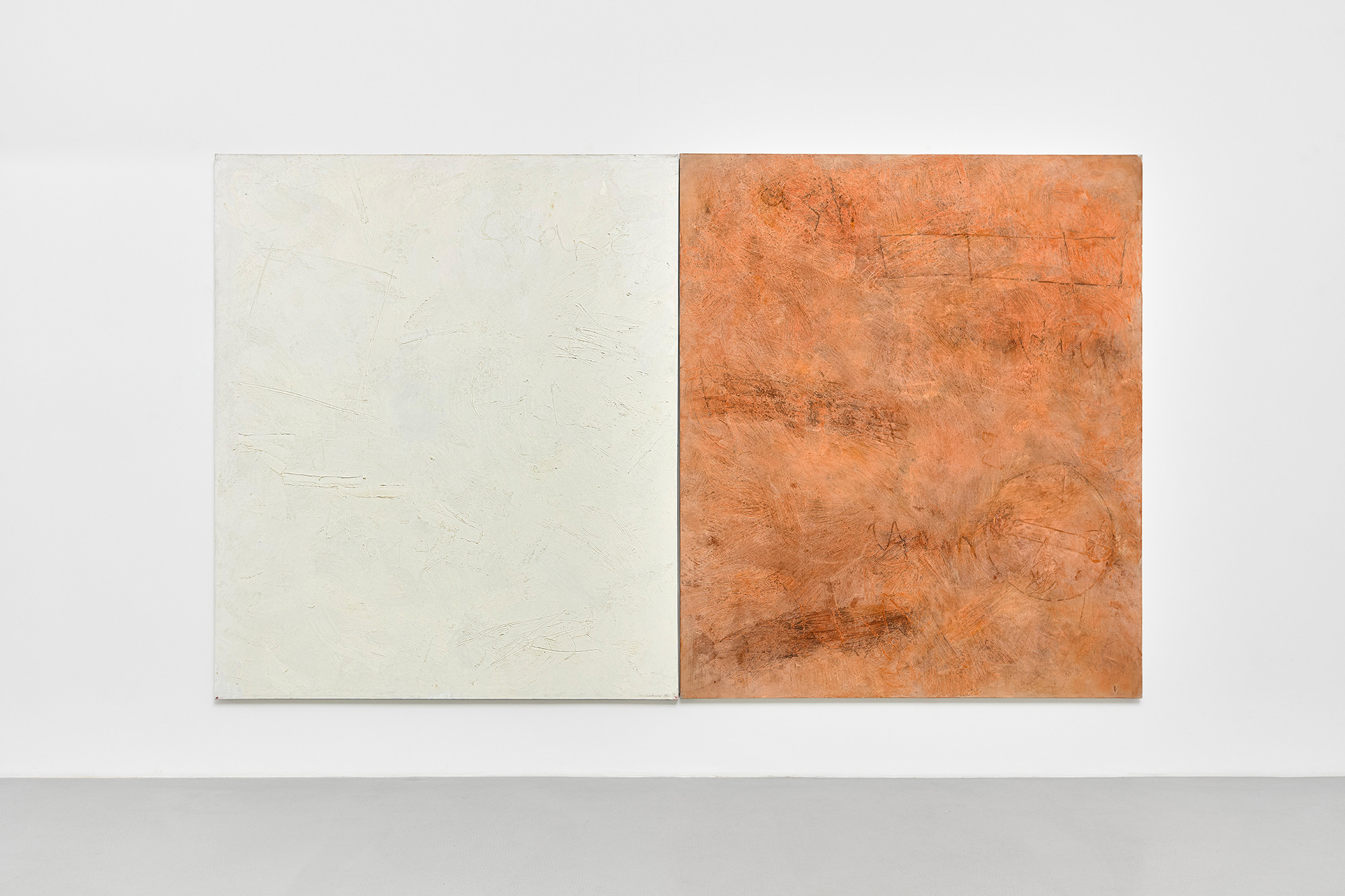
We can speak of two approaches to eroticism and bodily experiences. Duchamp’s art is no less erotic, but in a different way to sensual painting practices. The question is how Lakner, as a painter reflecting on the nature of painting, approaches these dilemmas. He returned to Duchamp’s art in 1978-79. He painted a new series, in which he scratched into the impasto, monochrome white (and later sometimes grey) ground the notes in Duchamp’s Green Box, mainly excerpts from the free verse text Litanies of the Chariot, associated with The Large Glass. As Lakner explained to Thomas Deecke, “In these nine pictures, most of which I painted in 1978 […], I made the colour white the subject of intervention and applied it – as old art manuals would say – ‘a la prima’. The substance of the material urged me to spontaneous action. I enjoyed how the motoric aspects embedded themselves into the thick surface of paint, and how I could regard transcribing the characters as identical to painting itself. Everything stemmed from reading Marcel Duchamp, especially his texts entitled ‘Notes and Projects for the Large Glass’, which I studied during long sleepless nights in the winter of 1978. I was intrigued by the recurrent problem of light as Duchamp analysed it there.”17
This was the first occasion in a long time that Lakner – having limited himself to making photorealistic pictures – shaped and moulded the surface with free gestures. He was interested in the interaction between the “substance of the material” and the “motoric aspects” – the constant ebb and flow between material and idea. It is likely more than mere coincidence that the starting point for the Duchamp series (which he created in parallel with a series dedicated to Leonardo, evoking an artist who had thematised the theoretical framework of art centuries earlier) was monochromy. Lakner painted monochrome pictures and thereby returned to the basics of making pictures. It is as though he were searching simultaneously for both the material and the ideological limits of painting. Perhaps Robert Ryman’s ethereal white-on-white monochrome is the best parallel for Lakner’s Duchamp series, which can on several layers be incorporated in the discourse about the end of painting, in the questions surrounding “painting as a task of mourning” (as described by Yve-Alain Bois).18
In 1961, Robert Morris spent two and a half hours repeatedly writing down on paper Duchamp’s “litanies” (Litanies [Litany of the Chariot], 1961), almost ritualistically “reciting” Duchamp’s text (“The Litanies of the Chariot by Marcel Duchamp. A Two and One Half Hour Recitation by R. Morris”). Lakner’s expressive works of quotation can also be seen as “recitations” (Manfred de la Motte used this term for them19), yet they follow a completely different logic, for what they do, over and over, is redirect the “beyond painting” back into the material of painting, smuggling, almost injecting Duchamp’s sublimated eroticism back into the body of the picture. Lakner often quotes the term “vicious circle”, and even more often the word “onanisme”, thereby apparently alluding simultaneously to the endless (“vicious”) circle of transition between different qualities and to the physical, erotic aspects of the sensuality of painting. (Duchamp himself referred to painting as “olfactory masturbation”.20)
The essence of the “vicious circle” is that it has neither beginning nor end, just like the sometimes magical ritual of recitation and repetition. In Lakner’s case, referencing is nothing more than identification, which is the framework for formulating open questions and dilemmas, the incessant shifting from material to concept and from concept to material. The Duchamp series is an open series, to which Lakner keeps returning: he paints new pieces of the series in brown, blue and other shades, symbolically referring to Rembrandt or even to Yves Klein, layering references on top of each other, creating ever newer sensually conceptual palimpsests. At times the references return as diptychs (continuing Lakner’s early paintings of this type), at others they recur as abstract structures of symbols.21
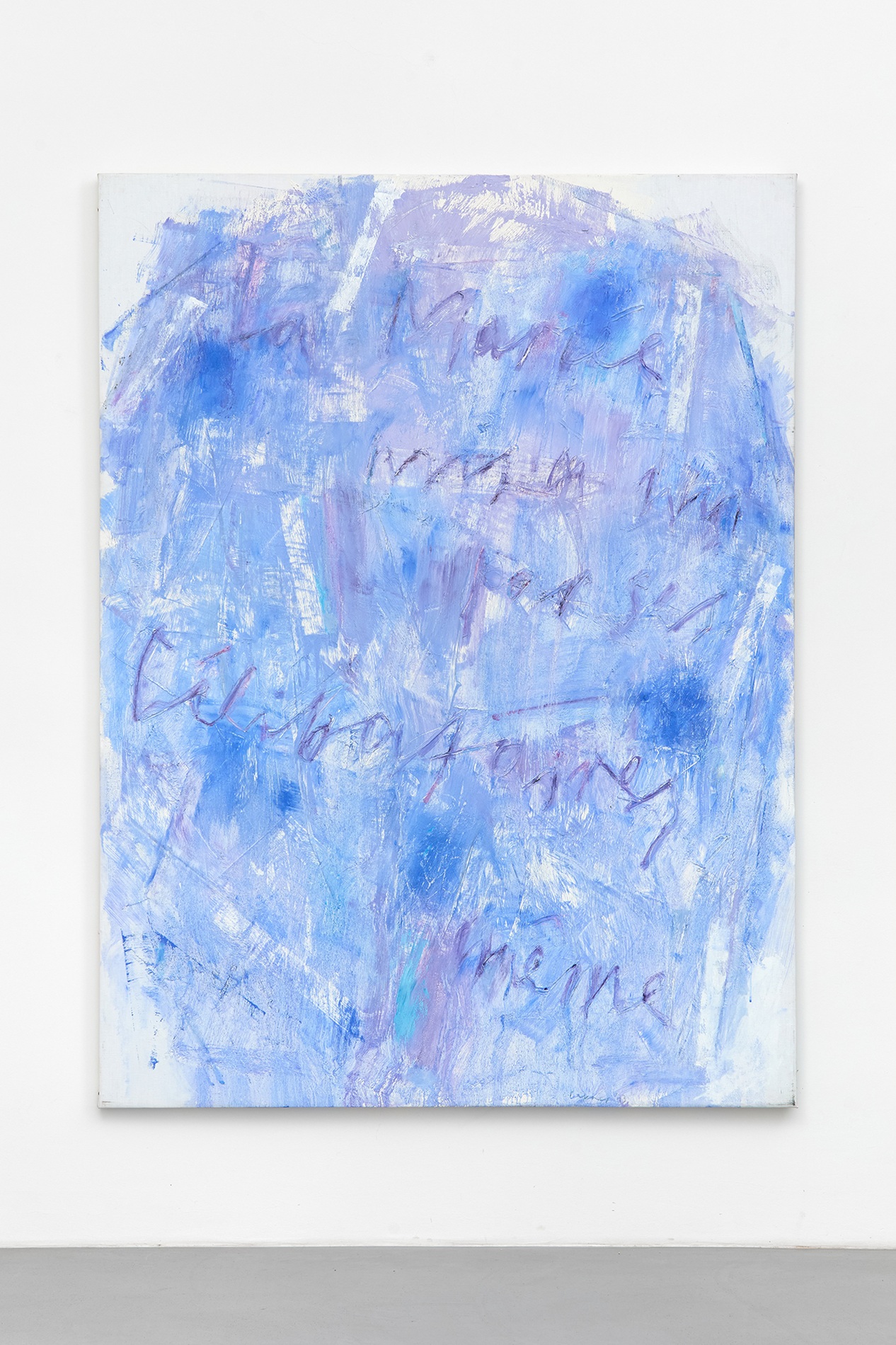
In one of the more recent Duchamp paraphrases (Duchamp, 2013), the white impasto surface is overwritten and permeated with ethereally translucent, almost lustrous shades of blues, which in places accumulate in soft patches. The inscription here, written in the artist’s own handwriting and “incised” into the mass of pigment, is none other than “La mariée mise a nu par ses célibataires même” [“The Bride Stripped Bare by Her Bachelors, Even”], the enigmatic title of The Large Glass, which has been interpreted in many ways. In relation to The Large Glass, can we think of the fourth dimension (as Jean Clair did)?22 I would rather quote De Duve again: “If painting was a bride, painters were her bachelors.”23 In other words, modern painting can be described as a process (not without erotic connotations) of stripping painting bare.
Could we say that Lakner strips painting bare? From a certain point of view, modernist abstract artists and monochrome painters certainly did so. Lakner, however, seems to strip painting bare in order to reclothe it, again and again. Is white-on-white monochrome, then, nothing more than a symbolic tabula rasa?
The transparent surface of The Large Glass is even more than a tabula rasa. It is a transparent plane, fragile and elusive, that allows the entire world to pass through it. When the glass cracked, it stopped being transparent. Man Ray took a strangely beautiful photograph of the dust-covered surface of The Large Glass (Dust Breeding, 1920). Lakner’s monochromes are similar to the dust-covered Large Glass. Lakner does not scrub the surface clean, but reveals the poetry of historical layers (“contaminations”) through ever newer quotations, references and alter egos. Duchamp had an aversion towards the painterly gesture and the handmark. Lakner, however, is interested in nothing else but the superimposition of various handmarks and touches.
Years ago, in a book by Georges Didi-Huberman, I came across a particularly beautiful phrase originating from Walter Benjamin: “To comb the overly glossy hair of history against the grain.”24 This is what Lakner does with his imaginary comb: he combs history and art history against the grain, greatly aided by Duchamp’s scepticism, humour and irony. He strips painting bare and then reclothes it, over and over, questioning its frames and its conditions of existence, within the sensual, and beyond the sensual.
1 - I never published my original essay of 2008, entitled Az olvasás mechanikája. Megjegyzések Lakner László Politechnikai olvasó szekrény című festményéhez (egy értelmezés vázlata) [The mechanics of reading. Notes on László Lakner’s painting entitled Polytechnical Instructional Cupboard (outline of an interpretation)], and my partial “retraction” and rethinking of it can be read in my doctoral dissertation: Dávid Fehér, Avantgarde-Arrièregarde. Történetiség, képiség, referencialitás Lakner László művészetében [Avant-garde–arrière-garde. Historicity, pictoriality and referentiality in the art of László Lakner], 2018, PhD dissertation, Doctoral School of Philosophy, Art History Programme, Budapest: Eötvös Loránd University, 180–184.
2 - Judit Szabadi, “Lakner László festészete” [The painting of László Lakner], in: Ibid. (ed.), Képzőművészeti almanach 2. [Fine art almanac 2], Budapest: Corvina, 1970, 118.
3 - Edit Szentesi, “Beszélgetés Lakner Lászlóval (1988. október 8. és 10., MNG adattár: 23117/1990)” [Conversation with László Lakner (8 and 10 October 1988, Hungarian National Gallery archives: 23117/1990], in: Ildikó Nagy (ed.), Hatvanas évek. Új törekvések a magyar képzőművészetben [The Sixties. New endeavours in Hungarian art], exh. cat. Magyar Nemzeti Galéria, Budapest: Képzőművészeti Kiadó – Magyar Nemzeti Galéria – Ludwig Múzeum, 1991, 132.
4 - “there are at least sixty works of mine in which (inspired by Marcel Duchamp and Yves Klein) I myself was my own model”. Letter from László Lakner to Dávid Fehér, Berlin, 10 May 2008.
5 - It was not by chance that Lakner suggested the term Alter ego as the title of his retrospective exhibition in 2022: Lakner László: Alter ego. Retrospektív kiállítás [László Lakner: Alter ego. Retrospective exhibition], Modem, Debrecen, 28 May – 11 September 2022.
6 - See: Fehér 2018, op. cit., 21–22.
7 - On the connection between Richter and Duchamp: Benjamin H. D. Buchloh, “Gerhard Richter: Gläserne Revolte”, in: Ibid., Scheiben und Strips von Gerhard Richter, Gerhard Richter Archiv, Dresden, Cologne: Verlag der Buchhandlung Walther König, 2013, 5–24; and: Dietmar Elger, “Perhaps I admired what I couldn’t do. Gerhard Richter’s work in the context of his role models and antitheses”, in: Jiří Fajt and Milena Kalinovská (eds.), Gerhard Richter, exh. cat. Prague: The National Gallery, 2017, 19–23 (esp. 21–22); the word “panoramic” refers to the title of the Richter retrospective held in 2011-2012: Gerhard Richter: Panorama. A Retrospective, Tate Modern, London (6 October 2011 – 8 January 2012); Neue Nationalgalerie, Berlin (12 February – 13 May 2012); Centre Pompidou, Paris (6 June – 14 September 2012). Cf. Mark Godfrey and Nicholas Serota (eds.), Gerhard Richter: Panorama. A Retrospective, exh. cat. Tate Modern, London, London: Tate Publishing, 2011.
8 - The word “metamorphic” refers to the title of the Lakner retrospective held in 2004-2005: Lakner László: Metamorfózis [László Lakner: Metamorphosis], Ludwig Múzeum, Budapest, 4 November 2004 – 30 January 2005.
9 - Fehér 2018, op. cit., 14.
10 - Fehér 2018, op. cit., 9–13.
11 - Thierry de Duve, “The Readymade and the Tube of Paint”, in: Ibid., Kant after Duchamp, October Books, Cambridge (Mass.): The MIT Press, 1996, 168.
12 - De Duve 1996, op. cit., 154 ff.
13 - Cited in: De Duve 1996, op. cit., 161–162.
14 - Cited in: De Duve 1996, op. cit., 163.
15 - De Duve 1996, op. cit., 165.
16 - De Duve 1996, op. cit., 164.
17 - László Lakner. Malerei 1974-1979. Eine Auswahl von Bildern und Objekten, exh. cat. Münster: Westfälischer Kunstverein, 1979, 25.
18 - Yve-Alain Bois, “Painting: The Task of Mourning.” In: David Joselit, Elisabeth Sussman and Bob Riley (eds.), Endgame. Reference and Simulation in Recent Painting and Sculpture. exh. cat. The Institute of Contemporary Art, Boston, Cambridge (Mass.) – London: The MIT Press, 1986, 29–49.
19 - Manfred de la Motte, “Rezitationen” oder “Die Köstlichkeit der Vorwände des Malers beim Schreiben”, in: Jochen Krüper and Manfred de la Motte (eds.), László Lakner. Rezitationen, exh. cat. Rottweil: Forum Kunst Rottweil, Essen: Galerie Heimeshoff, 1987, n.p.
20 - About his work entitled Paysage fautif, Duchamp once said, “It’s olfactory masturbation, dare I say. Each morning a painter, on working, needs apart from his breakfast, a whiff of turpentine... A form of great pleasure alone, onanistic almost.” Cited in: T. J. Demos: The Exiles of Marcel Duchamp, Cambridge (Mass.): The MIT Press, 2007, 59.
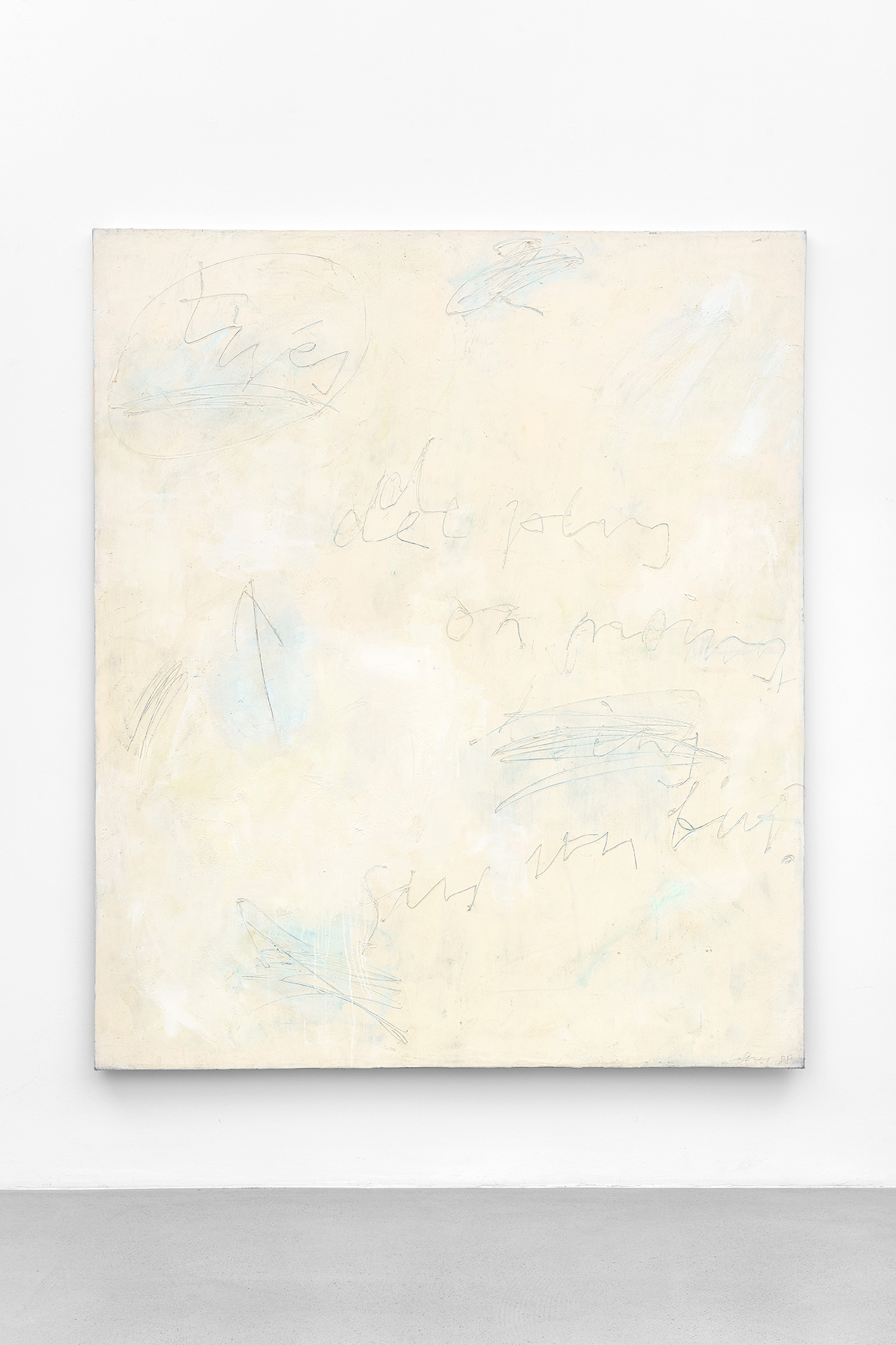
21 - The sources for the references are not all details from the Litanies of the Chariot, but may also be other pages from The Green Box, or other notes by Duchamp. For example, Lakner’s painting entitled Duchamp (1988) features the first sentence from a note entitled Tirés [Shots], written in 1912-1915 and now in the Centre Pompidou, which is also associated with The Green Box: “De plus ou moins loin ; sur un but” [From more or less far away; on a target]. For a reproduction of the manuscript and its transcription:https://www.centrepompidou.fr/fr/ressources/oeuvre/c4rrdL8 (last accessed: 1 November 2025).
22 - Jean Clair, Marcel Duchamp, ou le grand fictif. Essai de mythanalyse du grand verre, Paris: Editions Galilée, 1975.
23 - De Duve 1996, op. cit., 161.
24 - “Brosser à contresens le poil trop luisant de l’histoire.” Georges Didi-Huberman, La Ressemblance par Contact. Archéologie, anachronisme et modernité de l’empreinte, Paris: Les Éditions de Minuit, 2008, 21. The original quote, “Der historische Materialist [...] betrachtet es als seine Aufgabe, die Geschichte gegen den Strich zu bürsten,” comes from Walter Benjamin, Über den Begriff der Geschichte, written in 1940.